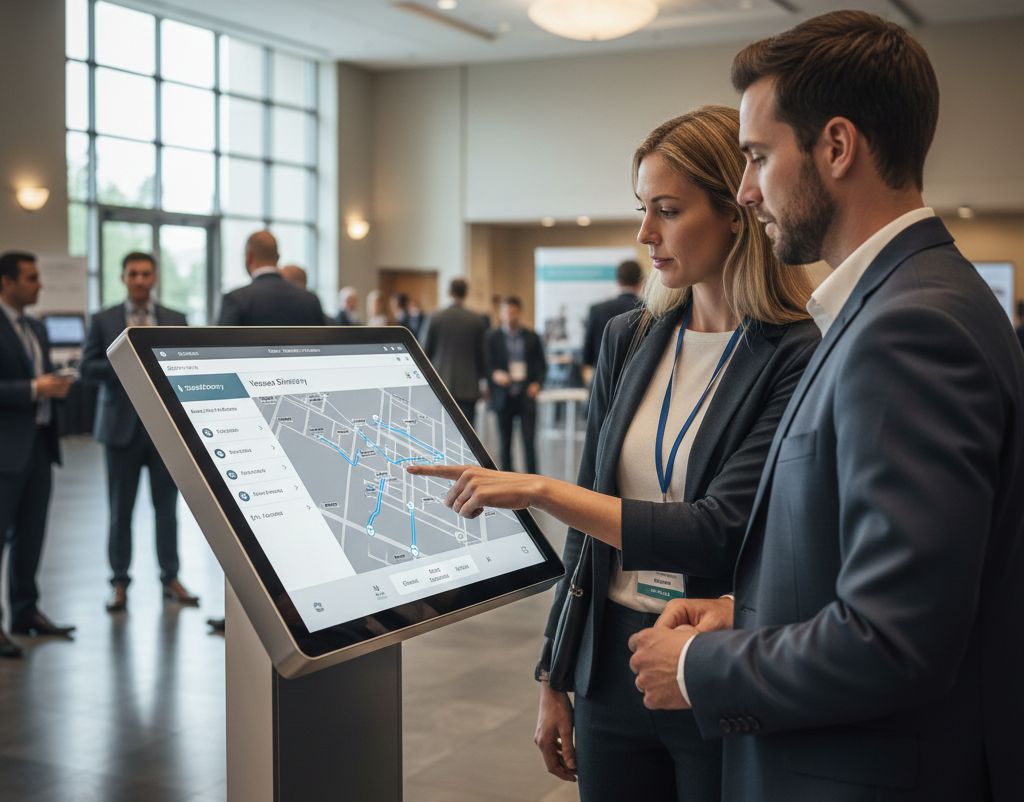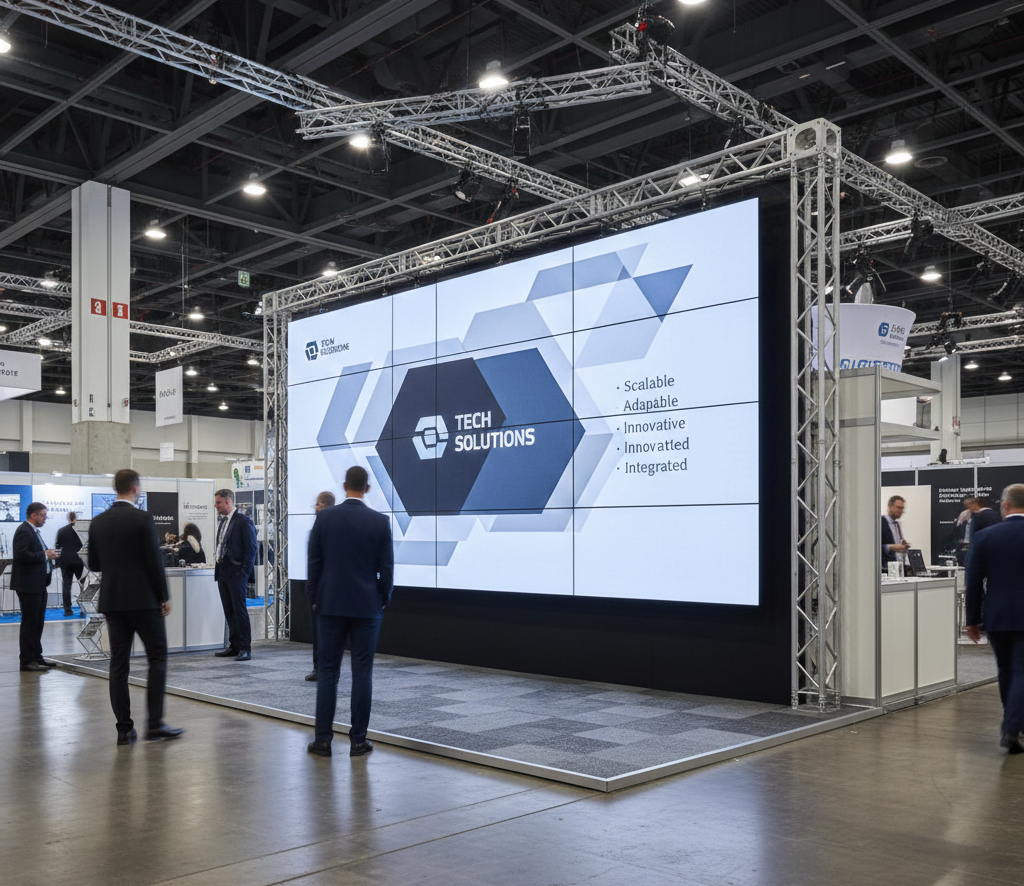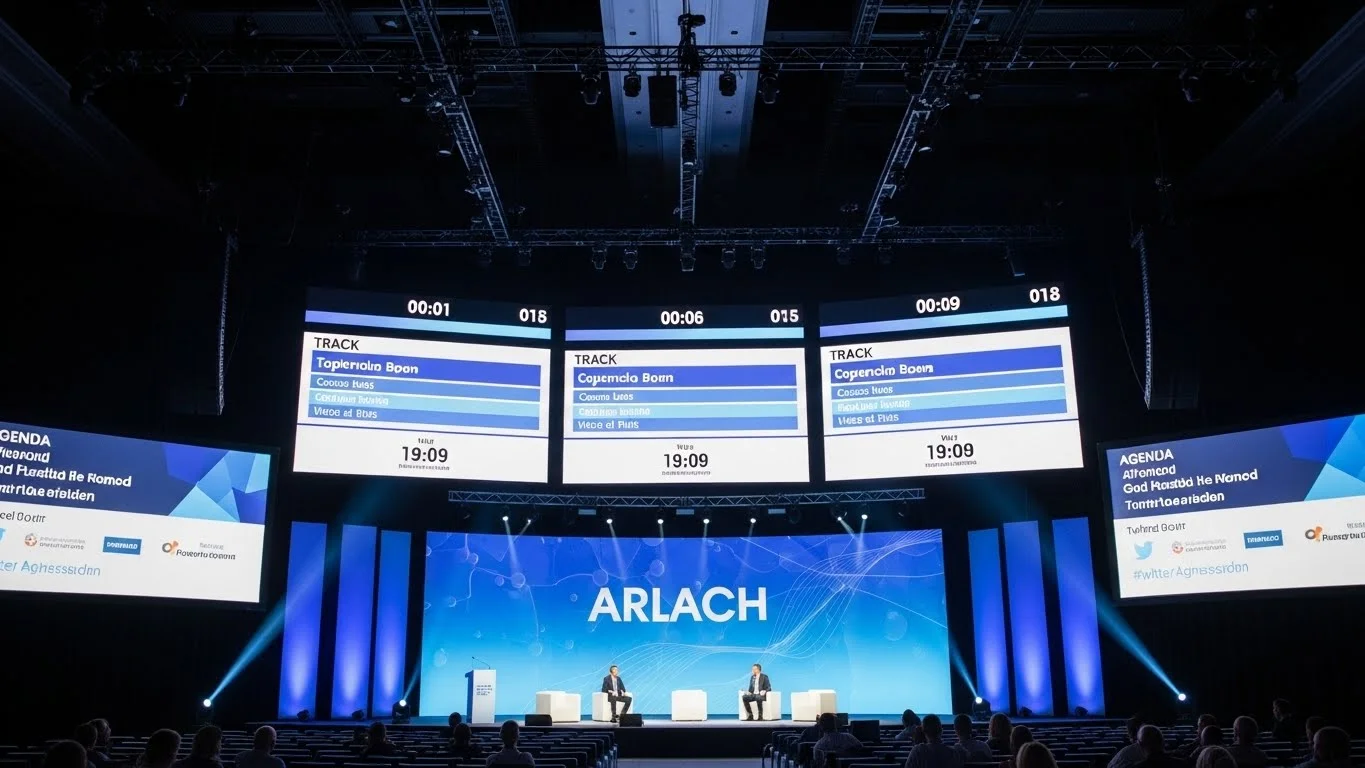
Interactivity drives engagement on the trade show floor. Touchscreen kiosk rentals from AVR Expos let your brand stand out at McCormick Place and other Chicago venues with custom apps, lead capture, and branded interfaces. Whether you’re running product demos or digital catalogs, our touchscreen rentals make your booth experience unforgettable.
Touchscreens Built for Trade Shows
Available sizes from 43” to 55”
Kiosk bases, wall mounts, or rolling stands
Durable glass for high-traffic use
Integration and Compatibility
HDMI, USB-C, and wireless screen mirroring
Works with custom HTML5, PowerPoint, and app-based content
Offline functionality for poor Wi-Fi areas
Streamlining Lead Capture and Analytics
QR integration and CRM-ready export
Data-driven engagement metrics post-show
Real-time updates with on-site media support
FAQ:
Q: Can we run our own software on the kiosks?
A: Yes, we preload and test your content before delivery.
Q: Are these displays mobile?
A: Yes, kiosk bases and rolling stands allow easy repositioning on the show floor.
Q: Do you provide on-site technical support?
A: Yes, a technician is available for installation and troubleshooting.
In Orlando’s nonstop event calendar, precision and reliability matter. Whether you’re hosting a corporate training, breakout session, or product demo near the Orange County Convention Center, the right projector setup defines clarity and professionalism. AVR Expos provides full-service projector rentals with delivery, setup, and on-site technical support throughout Orlando.
Why Choose Professional Projector Rentals in Orlando
Seamless integration with hotel AV systems
Brightness levels suitable for ambient light
Fast setup within tight hotel turnaround windows
Selecting the Correct Lumen Output
7K–10K lumens for training and breakout rooms
12K–15K lumens for ballrooms or main sessions
Laser projectors for consistent brightness and reliability
Screen Sizing and Placement
Rear vs. front projection layouts
Room depth and sightline considerations
Matching screen ratio to your content
Signal Flow and Support
HDMI and SDI extenders for long cable runs
Playback laptops, switchers, and backup paths
On-site tech for setup and live assistance
FAQ:
Q: What projector is best for 200 attendees?
A: A 12K lumen projector paired with a 10×18 screen delivers excellent clarity in most ballroom conditions.
Q: Can AVR Expos handle setup and teardown?
A: Yes, all Orlando projector rentals include delivery, setup, and post-event pickup.
Q: How far in advance should I book?
A: Two to three weeks is ideal, especially during major Orlando conferences.
https://www.avrexpos.com/wp-content/uploads/2025/10/Audio-Visual-Rentals-in-Atlanta-35.jpg6281200Nicholas Baadshaughttps://www.avrexpos.com/wp-content/uploads/2023/08/AVR-logo-1.webpNicholas Baadshaug2025-10-24 19:30:352025-10-28 21:57:39Orlando Projector Rentals for Hotel Conferences and Training Sessions
New York exhibit halls and hotels are space-constrained and fast-turn. If you are deciding between an LED wall and projection for a small booth, start with the room light and your content.
Space and power matter in NYC. A ground-supported LED wall requires base plates and a small footprint behind the wall; a flown wall can free floor space but needs rigging approvals.
Consider setup speed and risk. LED tiles are modular; a bad tile can be swapped, and calibration can be redone without losing the day. Projection may fit tighter budgets but requires more setup space.
Q: Which is better for small NYC booths, LED or projection?
A: LED for bright aisles and tall content. Projection for controlled rooms and single canvases on tighter budgets.
Q: What about power?
A: LED walls may need 208V three phase. Single projectors can run on a dedicated 20A circuit when brightness allows.
Q: Can I fly an LED wall in NYC hotels?
A: Often yes with approvals. Ground support is the simpler default when rigging is limited.
https://www.avrexpos.com/wp-content/uploads/2025/10/bbbb.jpg9401024Nicholas Baadshaughttps://www.avrexpos.com/wp-content/uploads/2023/08/AVR-logo-1.webpNicholas Baadshaug2025-10-21 16:06:142025-10-22 16:57:16NYC Booth Displays: LED vs Projection in Tight Spaces
Orlando hotels run meetings all day, which means ambient light and fast turns. Breakout rooms typically succeed with 7,000 to 12,000 lumen laser projectors when you can control house lights.
Choose a screen that fits both content and room sightlines. Rear projection keeps cables and presenters clear of the beam, but it costs you depth. Front projection is simpler to stage but needs tighter light control.
When should you choose LED over projection? In high ambient light or when the stage is tall and wide, LED’s contrast and punch win.
Las Vegas shows prioritize scale and visibility. Monitors from 55 to 86 inches are booth staples; 98 inches becomes a focal point for hero content or live demos.
Touchscreens increase dwell time when the interactions are fast and obvious. For lead capture, integrate a form with business-card scan and auto-sync to your CRM.
Content delivery should be reliable. Mini PCs with Ethernet provide stability, while USB players suit simple loops. Plan power drops early and confirm labor and security needs.
When you are taking a video wall of LED to Washington DC the correct specification will be reduced to sightlines, venue regulations and power. The size of most DC conference rooms as well as mid-size ballrooms is between 25 and 45 feet in terms of viewing distance. At 2.6 mm, the general session and expo booths are the most comfortable; at smaller areas or finer detailed content, 1.9 mm makes the text and user interface sharper. See our full guide to LED video wall rentals in DC.
DC venues often require advance power requests. For walls above 12 by 7 feet, plan for 208V three phase. Bring a clear distro spec with connectors and total amperage. Many DC hotels prefer ground supported walls to keep rigging off house steel; when flying, your stamped engineering and point loads must be submitted in advance.
Your processor plan matters. A Novastar workflow with VX-series or dedicated controllers keeps mapping consistent and supports redundancy. Provide content at native wall resolution and confirm color profile on-site.
Q: What pixel pitch is best for DC conference rooms?
A: For 25 to 45 foot viewing distance, choose 2.6 mm. For sub-20 foot viewing, step down to 1.9 mm.
Q: Do I need 208V three phase power?
A: For walls larger than 12 by 7 feet, yes. Confirm 208V three phase availability and location of drops.
Q: Can I fly the wall?
A: Many DC venues allow it with advance approval and engineering. Ground support is often simpler in hotels.
https://www.avrexpos.com/wp-content/uploads/2025/10/Audio-Visual-Rentals-in-Atlanta-34.jpg6281200Nicholas Baadshaughttps://www.avrexpos.com/wp-content/uploads/2023/08/AVR-logo-1.webpNicholas Baadshaug2025-10-17 16:29:122025-10-21 17:52:07LED video wall rentals Washington DC
Hybrid events have transformed the event industry by allowing people to experience physical engagement with hybrid events and establish virtual connections with global audiences. The application of hybrid events shows no signs of slowing down since businesses together with organizations began accepting digital transformation as an essential part of their operations.
The blog discusses hybrid event trends alongside effective partnership methods and established techniques to optimize engagement across digital and physical audience sectors.
What Are Hybrid Events and Why Do They Matter?
The demand for these events are rising as organizations recognize their numerous advantages:
Expanded Reach: Attendees worldwide can participate without the limitations of travel.
Flexibility & Accessibility: Virtual attendees can join from anywhere, making events more inclusive.
Cost Efficiency: Reduced travel and venue costs for attendees and organizers.
Increased Sponsorship Opportunities: Digital advertising and virtual booths create additional revenue streams.
Data & Analytics: Hybrid platforms provide real-time insights on audience behavior and engagement.
Essential Strategies for Integrating Virtual and In-Person Elements
To create a successful event, careful planning and the right AV technology are crucial. Here are key strategies to ensure a seamless experience:
1. Invest in High-Quality AV Technology
Live Streaming Equipment: Ensure HD or 4K cameras capture all angles for virtual attendees.
Professional Audio Systems: Use high-quality microphones and mixing consoles to deliver clear sound to remote viewers.
Multiple Display Screens: Keep in-person attendees engaged by integrating screens that showcase virtual participants.
Reliable Internet Connection: A dedicated high-speed connection is essential to avoid lag and streaming issues.
2. Create an Interactive Virtual Platform
A hybrid event isn’t just about live streaming—it’s about interaction. Use a feature-rich virtual platform that includes:
Live Q&A and Chat Features: Encourage audience participation.
Virtual Networking Lounges: Enable remote attendees to connect in breakout rooms.
Polls & Surveys: Gather real-time feedback from both online and on-site attendees.
On-Demand Content: Allow attendees to revisit key sessions after the event.
3. Engage Both Audiences Equally
Assign a virtual host to moderate online discussions and relay questions to in-person speakers.
Provide hybrid networking opportunities where remote and in-person attendees can interact.
Ensure speakers address both audiences directly, acknowledging online participants.
4. Hybrid-Friendly Content Design
Keep presentations short and engaging to maintain virtual audience attention.
Incorporate visual elements like infographics, animations, and live demos.
Offer simultaneous interpretation for international attendees if needed.
Challenges of Hybrid Events & Solutions
While these events offer significant benefits, they also come with challenges. Here’s how to overcome them:
Challenge
Solution
Technical issues (audio/video lag)
Use dedicated AV professionals and backup internet connections.
Audience engagement gap
Design interactive elements like gamification, polls, and hybrid breakout sessions.
Speaker focus imbalance
Train speakers to interact with both virtual and in-person attendees equally.
Networking difficulties
Implement AI-powered matchmaking and hybrid networking tools.
Choosing the Right Hybrid Event Production Services
Rehearse and Test Technology before the event to avoid technical failures.
Offer Multiple Viewing Options to accommodate different devices and time zones.
Keep the Event Mobile-Friendly for seamless access on smartphones and tablets.
Collect Post-Event Analytics to evaluate success and improve future events.
According to Cvent’s guide to hybrid events, successful planning starts with aligning in-person logistics and virtual engagement tools from the start.
Final Thoughts: Elevate Your Next Event with a Hybrid Format
The events industry’s development will be supported by hybrid events maintaining their central role in engagement activities. Event organizers who use AV technology along with interactive platforms and carefully designed content will deliver extraordinary experiences to their physical and virtual participants.
Do you wish to organize a flawless hybrid event? AtAVR Expos customers receive superior AV rental features which guarantee top-notch quality across every event experience. Our team will provide additional information about our services right now.
Planning a hybrid event?Contact AVR Expos to get expert guidance on AV setup for hybrid events and full-service production packages nationwide.
https://www.avrexpos.com/wp-content/uploads/2025/03/Add-a-heading-97.jpg6281200Nicholas Baadshaughttps://www.avrexpos.com/wp-content/uploads/2023/08/AVR-logo-1.webpNicholas Baadshaug2025-03-15 18:33:432025-04-07 20:05:42The Future of Hybrid Events: Integrating Virtual and In-Person Experiences
The event industry moves at high speed so organizers always seek better ways to engage their audiences. Interactive displays represent the most efficient method of attracting event guests because they generate unforgettable experiences. Eventgoers interact with touchscreen kiosks as part of the event experience to participate in real-time polling while taking advantage of immersive digital experiences for combined connection and learning benefits.
In this blog, we will explore the benefits of using interactive displays, provide examples of successful implementations, and offer tips on selecting the right technology for your event.
Why Use Interactive Displays at Events?
Interactive displays serve as more than screens because they utilize interactive elements which change passive viewers into participant collaborators. Here’s how:
Increased Engagement: Attendees are more likely to interact with content that requires their participation, such as touchscreen interfaces, interactive kiosks, and live polling.
Enhanced Learning & Retention: Studies show that interactive experiences improve information retention compared to traditional lectures or presentations.
Real-Time Feedback & Data Collection: Gather insights on attendee preferences, opinions, and behaviors instantly.
Personalized Experiences: Customizable content adapts to user interactions, creating tailored experiences for each attendee.
Stronger Brand Connection: Interactive displays provide a hands-on way for attendees to connect with your brand, fostering a deeper relationship.
Types of Interactive Displays & How They Work
1. Touchscreen Displays & Kiosks
Ideal for trade shows, conferences, and corporate events, touchscreen kiosks allow attendees to browse event schedules, explore product catalogs, and access interactive maps.
Example: A major tech conference installed touchscreen kiosks at key points, enabling attendees to navigate the venue, find sessions, and even schedule networking meetings.
Best for: Wayfinding, product demos, event information.
2. Interactive Video Walls
Large, high-resolution video walls encourage group interaction by allowing multiple users to engage with the display simultaneously.
Example: At a healthcare expo, an interactive video wall let attendees explore 3D anatomy models, providing an immersive and educational experience.
Best for: Large-scale presentations, immersive storytelling, corporate branding.
3. Live Polling & Q&A Screens
Live polling technology allows speakers to interact with audiences in real time. Attendees can respond to questions via their mobile devices, with results displayed instantly on large screens.
Example: A corporate seminar used live polling to gauge audience opinions on industry trends, making sessions more interactive and relevant.
Best for: Keynote sessions, panel discussions, training workshops.
By integrating AR and VR, events can offer attendees immersive experiences that go beyond traditional screens.
Example: A real estate event allowed attendees to tour virtual property models using VR headsets, giving them a hands-on experience without visiting the physical locations.
Best for: Experiential marketing, product demonstrations, gamification.
5. Digital Whiteboards & Collaboration Tools
Interactive whiteboards enable real-time brainstorming and collaboration, making them ideal for workshops and breakout sessions.
Example: A business conference featured an interactive whiteboard where teams could develop ideas collaboratively and export notes directly to their devices.
Best for: Workshops, corporate training, collaborative planning.
Tips for Choosing the Right Interactive Display
To maximize engagement, it’s crucial to choose the right interactive technology based on your event type, audience, and goals. Here are key factors to consider:
Event Size & Venue: The size of the venue determines whether venues need video walls or touchscreen kiosks.
Audience Demographics: Audiences who are technologically inclined tend to prefer augmented reality along with virtual reality experiences yet corporate participants respond best to digital whiteboards.
Budget & ROI: Consider rental costs versus long-term investment benefits.
Ease of Use: The technology should be user-friendly and require minimal attendee training.
Connectivity & Integration: Audience members who prefer technology will choose AR/VR interactions while corporate participants will interact primarily with digital whiteboards.
Conclusion: Elevate Your Event with Interactive Displays
Event organizers gain intractable benefits from interactive displays to improve audience participation and event engagement levels. The correct technology selection between touchscreen kiosks and video walls and live polling will change your event into a dynamic memorable experience that engages your audience.
Events seeking interactive displays should contact AVR Exposfor their expert AV solutions. The professional AV solutions from AVR Expos are developed according to specific customer requirements. Reach out to us at this moment to upgrade your event with advanced interactive display solutions.
https://www.avrexpos.com/wp-content/uploads/2025/03/Add-a-heading-2-845x321-1.webp321845Nicholas Baadshaughttps://www.avrexpos.com/wp-content/uploads/2023/08/AVR-logo-1.webpNicholas Baadshaug2025-03-14 18:20:282025-04-07 20:04:01How to Leverage Interactive Displays to Boost Audience Engagement
Corporate events rely on high-quality audiovisual (AV) technology to deliver seamless presentations and engage attendees. Whether you’re hosting a small seminar or a large corporate conference, having the right gear is essential. This AV equipment checklist for corporate events outlines everything you need for a smooth, professional experience—plus tips to match your setup to the size, venue, and format of your event.
1. Sound System Essentials for Corporate Events
Clear audio is one of the most critical components of any event. Here’s what your sound system should include:
Must-Have Audio Equipment
• Microphones: Handheld, lapel (lav), and headset options depending on speaker mobility.
• Speakers: Powered speakers or a PA system based on venue size.
• Mixing Console: Balances multiple audio sources for better control.
• Amplifiers: Boost audio output for large rooms or ballrooms.
• Audio Interface: Ensures seamless integration of digital audio.
Pro Tip: Always run a soundcheck to eliminate echo or feedback and ensure every seat in the room gets clear sound.
The smallest tools often prevent the biggest problems.
Essential Accessories
• Power Strips & Extension Cords
• Spare Batteries & UPS Devices
• Cables & Adapters: HDMI, VGA, USB-C
• AV Control System: Centralized control for audio, video, and lighting
Pro Tip: Always have a backup kit on site—you never know when you’ll need that extra HDMI cable.
Conclusion: Your AV Equipment Checklist for Corporate Events
With the right AV setup, your corporate event can look and sound polished, professional, and engaging. From crystal-clear audio to immersive visuals and lighting, this checklist ensures nothing is left behind.
Looking to rent reliable AV equipment for your next business event? AVR Expos provides expert support and cutting-edge gear nationwide.
https://www.avrexpos.com/wp-content/uploads/2025/03/Add-a-heading-1-845x321-1.webp321845Nicholas Baadshaughttps://www.avrexpos.com/wp-content/uploads/2023/08/AVR-logo-1.webpNicholas Baadshaug2025-03-13 21:08:342025-04-07 20:02:47AV Equipment Checklist for Corporate Events
2025 holds the key for the AV industry and with the eye on the ball, the industry is on the verge of a revolution. Advanced intelligent applications, room immersion and reality elements, virtual intent, and interactive realities are set to redefine communication, entertainment and interaction in various industries.
1. AI-Powered AV Systems
AI is gradually becoming a game-changer in AV systems where the adjustment of the systems becomes an easy task. There is still a lot of room for improvement, though notable development is seen in autonomous camera control based on artificial intelligence. With AI the cameras can follow the speakers without requiring someone to adjust the focal length of the cameras. This feature proves really useful in environments that are ever changing such as conferences and even classrooms. Learn more about AI trends in AV technology.
Another area of impact is the elimination of noise. Noise cancellation algorithms brought about through the use of Artificial Intelligence have emerged as a new revolution in virtual meetings. These algorithms use technologies from machine learning to screen out such noise sources as chatter, typing, or street noise. Thus, participants can observe the other, express him or herself without interference based on the physical distance. Check out our Wireless Microphone Rentals for optimal audio quality.
AI also improves subscription services or any content delivery that requires personalization. Consequently, such AI algorithms identify user information to present fascinating contents suitable for the respective audience. This personalization increases the traffic and interactions by the users and makes them happier. Explore how AI personalizes AV experiences.
In addition, AI enables the implement of prediction maintenance on the AV systems. AI algorithms can be used to analyze data acquisition from a system of sensors, and based on that data detect signs of AV devices’ health problems and predict their failures beforehand. Defining the process of predictive maintenance as a way to avoid unanticipated outages, achieve optimal operating time of the equipment, and minimize the expenses for maintenance.
Integrating AI with AV systems, mobiles devices’ use for more than just functions, but increases interaction for users too. Due to the advancement of AI technology, its application to av systems is still capacitated for tremendous shift in the user interface of audio-visual systems.
2. Immersive Experiences with Augmented and Virtual Reality
AR and VR are expected to be the main drivers of experiential solutions evolving into engaging and interactive solutions by the year 2025. These technologies are in a position of revolutionizing different fields; some of the fields, include; Education, entertainment, and healthcare. Learn about future AR/VR trends.
In learning, AR and VR provide a way of enabling the learner to learn because they create an environment where they model different objects of learning. For instance, medical students can simulate surgeries in order to perfect them before touching the real patient.
AR and VR are also gradually applied to the entertainment industry for providing the audiences with cool experiences. These technologies range from virtual concerts to interactive theme parks allowing the users a closer feel to the content making the feelings evoked real and the user satisfaction real. Explore how our LED Video Wall Rentals create immersive experiences.
In parts of healthcare, both AR and VR are used when it comes to patient treatment, and even when patients are administered their therapy. In treatment, one gets exposed to virtual reality exposure therapy where patients with phobia are treated in virtual environment in order to enable the individual to overcome the diseases for better mental health.
The integration of AI with AR and VR is further enhancing these immersive experiences. AI algorithms can adapt virtual environments in real-time based on user interactions, providing personalized experiences that cater to individual preferences and behaviors.
With the help of advances in field of integrated circuits, which reduce the costs of calculating equipment and with the help of advances in the software sector which can complicate multimedia applications archetypes, the rates of the AR and VR technologies’ acceptance is expected to increase rapidly and take the important place taking the important place in the day to day utilization by 2025.
3. Sustainable AV Solutions
With the current increasing awareness of environmental impact, the AV industry is turning towards a green approach. This shift covers innovation in energy saving technologies, use of environmentally friendly material and proper disposal & management of wastes. Explore sustainable AV practices.
A key development is the incorporation of energy conservation equipment. Today’s technology in AV systems is developed in a way that it requires less power yet efficient. For example, LED displays and low power audio devices which are used to reduce the energy consumption are mainstream, corresponding to global sustainability policies. See how our Energy-Efficient Displays can enhance your events sustainably.
The industry is also concerned with the sustainability of its materials. Companies continue to integrate reusable parts and environmentally friendly material into the products they produce. This approach is further effective in protecting the environment and complement the circular economy practice on reusing and recycling used AV equipment.
Waste reduction is another critical aspect. Implementing lifecycle management strategies ensures that AV products are designed for longevity and recyclability. This includes selecting products with recyclability in mind, extending equipment life through regular maintenance, and responsibly recycling materials at the end of their use.
Some of the modern firms including Sony have remained ahead of everyone by demonstrating sustainable AV Technologies including energy efficient displays and projectors. This also shows that the industry has a relatively aggressive stance when it comes to environmental sustainability responsibilities.
Implementing these sustainable AV solutions, the industry not only solves an environmental problem, but also adds value to consumers’ and businesses’ desire to be environmentally conscious. These changes are a part of the industry’s move towards embracing sustainability and better management of resources, within the field of technology.
Advanced display technologies are set to revolutionize visual experiences across various sectors by 2025. Key innovations include Quantum Dot Electroluminescent Displays (QDEL), MicroLEDs, and Holographic Extended Reality (HXR) platforms. Read about advancements in display technology.
Quantum Dot Electroluminescent Displays (QDEL) This is a great leap in display technology and led technology in particular. These are different from other displays that need backlight to work except QDELs that contain quantum dots which illuminates directly when given an electric impulse enhancing brightness, colors and power consumption. This technology is expected to be a successor to OLED particularly in premium TVs since it is more efficient and durable than the later.MicroLEDs are another revolutionary invention that has arrived. MicroLED displays consist of minute LEDs and provide high brightness and contrast, improved compared to those found in conventional LED screens with response rates in a matter of microseconds. Due to their inherent modularity, CVD-grown graphene is suitable for the formation of large-scale bezel-less displays, which would find applications in both the consumer electronics and commercial industries. Although at the moment it is a relatively new technology, MicroLED is anticipated to become mainstream by 2025, revolutionizing the displays industry.
The introduction of Holographic Extended Reality (HXR) platforms is set to redefine immersive experiences. HXR technology creates high-resolution 3D images by sculpting and steering light, enabling true holographic displays without the need for wearable devices. This innovation has vast potential applications, from entertainment to medical imaging, providing users with unprecedented levels of interaction and realism.
These advanced display technologies are not only enhancing visual quality but also paving the way for new applications and experiences. As they become more accessible and cost-effective, industries ranging from consumer electronics to healthcare are set to benefit from the improved performance and versatility these technologies offer.
4. Enhanced Connectivity with 5G Integration
The integration of 5G technology is set to revolutionize audiovisual (AV) systems by 2025, offering unprecedented speed, reliability, and low latency. This advancement will significantly enhance real-time interactions, making virtual meetings, webinars, and training sessions more effective, especially for mobile users. Understand the impact of 5G in AV.
In the realm of live events and large-scale broadcasts, 5G’s high-speed, low-latency capabilities will enable ultra-fast content streaming and seamless cloud-based collaboration, ensuring high-quality audio and video essential for such occasions.
Moreover, 5G’s ability to support a massive number of devices simultaneously is crucial as the Internet of Things (IoT) continues to expand. This feature will facilitate the development of smart factories and connected cars, enhancing production efficiency and enabling vehicles to transact with each other, respectively.
The entertainment and media industries are also set to experience a transformation with 5G. High-definition streaming, immersive gaming experiences, and live broadcasts with minimal buffering will become the norm, delivering richer and more engaging content to users.
As 5G technology continues to roll out globally, businesses must prepare for its transformative impact. By 2025, the 5G revolution will be in full swing, with vast implications across multiple industries, offering faster speeds, lower latency, and more reliable connections.
In summary, the integration of 5G technology into AV systems by 2025 is poised to enhance connectivity, improve user experiences, and drive innovation across various sectors. Staying informed about these developments will be essential for professionals and enthusiasts looking to leverage the full potential of 5G-enabled AV technology.
5. AI-Driven Collaboration Tools
Artificial Intelligence (AI) is transforming collaboration tools, enhancing efficiency and user experience across various sectors. By 2025, AI-driven collaboration platforms are expected to become integral to both remote and in-person work environments. Discover collaboration tools powered by AI.
One significant advancement is AI-enhanced video conferencing. AI algorithms can automatically adjust camera angles, lighting, and backgrounds to ensure optimal visual quality. Additionally, real-time language translation powered by AI facilitates seamless communication among participants speaking different languages, fostering inclusivity and global collaboration.
Intelligent scheduling assistants are also streamlining meeting coordination. These AI tools analyze participants’ calendars, time zones, and preferences to suggest optimal meeting times, reducing the back-and-forth typically involved in scheduling. This automation enhances productivity by allowing teams to focus on substantive tasks.
In the realm of document collaboration, AI-driven platforms offer features like automated version control, content summarization, and context-aware editing suggestions. These capabilities ensure that team members can collaborate on documents more efficiently, maintaining consistency and accuracy across shared materials.
Furthermore, AI-powered project management tools provide predictive analytics to forecast project timelines, resource allocation, and potential bottlenecks. By analyzing historical data and current project parameters, these tools assist managers in making informed decisions, thereby improving project outcomes.
The integration of AI into collaboration tools is also enhancing accessibility. Features such as real-time transcription, voice commands, and personalized user interfaces cater to individuals with diverse needs, promoting an inclusive work environment.
As AI technology continues to evolve, its role in collaboration tools is set to expand, offering more sophisticated features that adapt to the dynamic needs of modern workspaces. Organizations adopting these AI-driven tools can expect improved efficiency, enhanced communication, and a more cohesive collaborative experience by 2025.
6. Integration of Internet of Things (IoT) in AV
The integration of the Internet of Things (IoT) into audiovisual (AV) systems is set to revolutionize the industry by 2025, creating smarter, more connected environments that enhance user experiences and operational efficiency.
Enhanced Connectivity and Automation: IoT-enabled AV systems facilitate seamless communication between devices, allowing for unified control and automation. For instance, in smart buildings, AV equipment can interact with lighting, HVAC, and security systems to adjust settings based on occupancy or user preferences, thereby improving energy efficiency and user comfort. Learn more about IoT integration.
Data Analytics and Predictive Maintenance: IoT devices collect valuable data on system performance and usage patterns. This information enables predictive maintenance strategies, where potential issues are identified and addressed before they lead to system failures, reducing downtime and extending equipment lifespan.
Smart Control Systems: The convergence of AV systems with IoT technology allows for centralized, user-friendly control interfaces. Users can manage multiple devices through a single platform, enhancing convenience and streamlining operations in both residential and commercial settings.
Personalized User Experiences: IoT integration enables AV systems to adapt to individual user preferences. For example, conference rooms can automatically adjust settings such as lighting, audio levels, and display configurations based on the meeting organizer’s known preferences, creating a more personalized and efficient environment.
Scalability and Flexibility: IoT facilitates the expansion and customization of AV systems to meet evolving needs. As organizations grow or adapt to new technologies, IoT-integrated AV solutions can be easily scaled or reconfigured, providing long-term value and adaptability.
The fusion of IoT and AV technologies is poised to create intelligent environments that respond dynamically to user needs, driving innovation and efficiency across various sectors by 2025.
7. AI-Enhanced User Interfaces
Artificial Intelligence (AI) is revolutionizing user interfaces (UIs) in audiovisual (AV) systems, making them more intuitive and responsive. By 2025, AI-enhanced UIs are expected to become standard, significantly improving user interaction and accessibility. Explore AI in AV user interfaces.
One notable advancement is voice control integration. AI-driven voice recognition technology allows users to operate AV devices using natural language commands, eliminating the need for physical controls. This hands-free approach enhances convenience and reduces the learning curve, making AV systems more accessible to a broader audience. Learn more about our Interactive Display Rentals.
Gesture-based controls are also gaining prominence. AI algorithms can interpret hand movements to adjust settings like volume or screen brightness, providing a seamless and intuitive means of interaction. This technology is particularly beneficial in environments where touchless control is preferred.
Furthermore, AI enables personalized user experiences by learning individual preferences over time. For example, AI can adjust lighting, temperature, and display layouts based on user habits, creating a customized environment that enhances comfort and productivity.
Incorporating AI into UIs also facilitates adaptive interfaces that adjust in real-time to user behavior and context. Such adaptability ensures that the system remains user-friendly, catering to both novice and experienced users by presenting appropriate options and assistance as needed.
As AI technology continues to evolve, its integration into AV user interfaces is set to redefine human-computer interaction, making systems more intuitive, personalized, and accessible by 2025.
8. AI-Driven Content Creation and Curation
An example of illustrating a smart content writing tool is where the user enters basic information, and the AI tools spits out more substance, images, and videos. This automation reduces the number of frames of productions and brings down costs thus enabling the creators to focus on key and creative aspects. Read about AI’s role in content creation.
Automated Content Generation: A demonstration of a smart content writing tool is where the user makes simple inputs, and the AI-powered tools gives out quality articles, images and videos. This automation shortens time-frames of productions and cuts costs, making it possible for creators to concentrate on vital and innovative elements.
Personalized Content Curation: AI algorithms help to analyses user data to suggest to users the most relevant content and improve users’ experience. In this way, by considering audience interests, AI guarantees that such audiences keep on engaging with the content that would interest them more and create a stronger bond.
Enhanced SEO and Trend Prediction: AI helps out in the improvement of the content’s ranking on the various search engine platforms by making analysis of the search trends besides the behaviors of the users. It can identify topics that are likely to become popular in the future so that content producers create content with values that the audience is likely to engage with, thus increasing visibility.
Ethical Considerations: Scientists speak of ‘AI-generated content’, and such methods immediately raise questions about the nature and originality of materials. Experts talk about “AI flop” meaning that people face AI-produced novelties of very limited worth filling the web nowadays. To secure the audience’s trust the power of AI should always be complimented by the talent of artists and coordinators.
With ongoing advancements in AI, its application in content production and content sourcing is expected to become even more extensive to add additional intricate trends to match the complex nature of modern consumers. Such changes shall result to organizations which adopt these AI tools have efficiency gain, personalization and better content strategy organization by 2025.
9. AI-Powered Predictive Maintenance
Artificial Intelligence (AI) is changing the way of predictive maintenance in many industries and including industries related to audio visual (AV) sector. On account of the current approach to AI technology development, integrated use of predictive maintenance for AI-based AV systems is expected by 2025 as a result of improvement of reliability, efficiency, and costs. Discover AI-driven maintenance strategies.
Real-Time Monitoring and Data Analysis: Predictive maintenance systems using artificial intelligence inspect equipment constantly through sensors and the internet of things by collecting data on temperature, vibration, and usage pattern. In this case, sophisticated mathematical models are applied to crack such data to identify patterns suggesting failure and to devise strategies that allow for prevention.
Reduced Downtime and Maintenance Costs: The use of Artificial Intelligence in the prediction maintenance reduces looming suppleness thus only organizing for maintenance where necessary. This approach not only increases the useful lifetime of the AV equipment but also decreases the amount of maintenance that is frequently required and minimizes the possibility of a system failure.
Enhanced Decision-Making: Predictive maintenance through AI offers a great opportunity for detecting technical condition and planning proper action relying on objective data. Therefore, comprehending health and AV systems performance helps companies to manage the system effectively and efficiently and satisfy user expectations.
Scalability and Adaptability: Advanced AI solutions that are in use for the enhanced predictive maintenance show potential for scalability and flexibility which makes them valuable for integration into AV systems regardless of their size or variety. These systems can be adapted with new data flow input types when new types of data may appear, and will always get progressively better and more accurate in their predictions.
The implementation of AI-based PM into AV systems should be a reality by 2025, and this will improve efficiency, reduce functioning expenses, and increase user satisfaction. These technologies will help organizations to sustain high performance as well as remain competitive in the fast growing AV industry.
https://www.avrexpos.com/wp-content/uploads/2025/01/Add-a-heading-66-1030x539-1.webp5391030Nicholas Baadshaughttps://www.avrexpos.com/wp-content/uploads/2023/08/AVR-logo-1.webpNicholas Baadshaug2025-01-12 23:18:492025-04-07 20:00:13Innovations in AV Technology for 2025: Transforming the Future of Audio-Visual Experiences
We may request cookies to be set on your device. We use cookies to let us know when you visit our websites, how you interact with us, to enrich your user experience, and to customize your relationship with our website.
Click on the different category headings to find out more. You can also change some of your preferences. Note that blocking some types of cookies may impact your experience on our websites and the services we are able to offer.
Essential Website Cookies
These cookies are strictly necessary to provide you with services available through our website and to use some of its features.
Because these cookies are strictly necessary to deliver the website, refusing them will have impact how our site functions. You always can block or delete cookies by changing your browser settings and force blocking all cookies on this website. But this will always prompt you to accept/refuse cookies when revisiting our site.
We fully respect if you want to refuse cookies but to avoid asking you again and again kindly allow us to store a cookie for that. You are free to opt out any time or opt in for other cookies to get a better experience. If you refuse cookies we will remove all set cookies in our domain.
We provide you with a list of stored cookies on your computer in our domain so you can check what we stored. Due to security reasons we are not able to show or modify cookies from other domains. You can check these in your browser security settings.
Google Analytics Cookies
These cookies collect information that is used either in aggregate form to help us understand how our website is being used or how effective our marketing campaigns are, or to help us customize our website and application for you in order to enhance your experience.
If you do not want that we track your visit to our site you can disable tracking in your browser here:
Other external services
We also use different external services like Google Webfonts, Google Maps, and external Video providers. Since these providers may collect personal data like your IP address we allow you to block them here. Please be aware that this might heavily reduce the functionality and appearance of our site. Changes will take effect once you reload the page.
Google Webfont Settings:
Google Map Settings:
Google reCaptcha Settings:
Vimeo and Youtube video embeds:
Other cookies
The following cookies are also needed - You can choose if you want to allow them:
Privacy Policy
You can read about our cookies and privacy settings in detail on our Privacy Policy Page.