
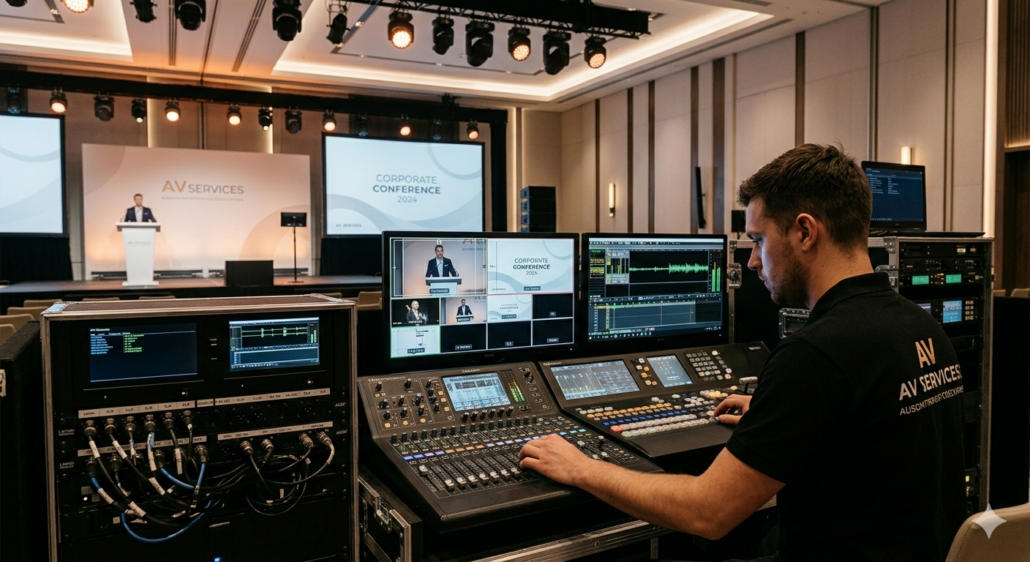
How to Prevent AV Failures During Live Events
AV failures rarely come from a single mistake. They come from a chain of small oversights that build into a visible problem at the worst possible moment. A cable that wasn’t tested. A backup that wasn’t prepared. A signal path that wasn’t verified.
Live events leave no room for recovery. Prevention is the only reliable strategy.
The Most Common AV Failure Points
Failures typically occur in predictable areas:
- Signal switching errors
- Wireless interference
- Playback issues
- Power inconsistencies
- Improper content formatting
These are not rare problems. They are common and preventable.
Build Redundancy Into Critical Systems
Redundancy does not mean duplicating everything. It means protecting the most important elements.
Backup Playback
Always have:
- Secondary laptop
- USB backup files
- Offline versions of all media
Dual Signal Paths
Critical displays should never rely on a single input source.
Test in Real Conditions
Testing must reflect the actual event environment:
- Same lighting
- Same inputs
- Same timing
Partial testing creates false confidence.
Content Compatibility Matters
Incorrect resolution or file formats can break otherwise stable systems.
Always match:
- Display resolution
- Aspect ratio
- Playback format
The Role of Professional Technicians
Technicians monitor:
- Signal integrity
- Audio levels
- Switching transitions
They solve problems before they become visible.
Standardization Reduces Risk
Repeatable systems across events reduce variables and improve reliability.
Conclusion
Preventing AV failures starts with proactive planning, thorough testing, and experienced technical support. By identifying common risk areas, building redundancy into critical systems, verifying content compatibility, and conducting full rehearsals under real event conditions, event planners can greatly reduce the chance of technical disruptions. Professional AV technicians provide an added layer of reliability by monitoring systems throughout the event and resolving issues before they impact the audience. A well-prepared AV strategy ensures your presentations run smoothly, protects your brand’s reputation, and delivers a seamless experience from start to finish.
Frequently Asked Questions
What are the most common causes of AV failures during live events?
Common causes include signal switching errors, wireless microphone interference, playback issues, power interruptions, incorrect content formatting, and inadequate equipment testing.
What is AV redundancy, and why is it important?
AV redundancy means having backup systems—such as secondary laptops, spare microphones, duplicate signal paths, and backup media files—ready to take over immediately if the primary system fails.
Why should AV equipment be tested before an event?
Testing verifies that all equipment, content, and connections function correctly under real event conditions, helping identify and resolve issues before attendees arrive.
How does content compatibility affect AV performance?
Presentations, videos, and graphics should match the display’s resolution, aspect ratio, and supported file formats. Incorrect settings can cause playback problems or poor visual quality.
Why are professional AV technicians important during live events?
Experienced technicians monitor audio, video, and presentation systems in real time, quickly troubleshoot issues, and ensure seamless transitions throughout the event.