
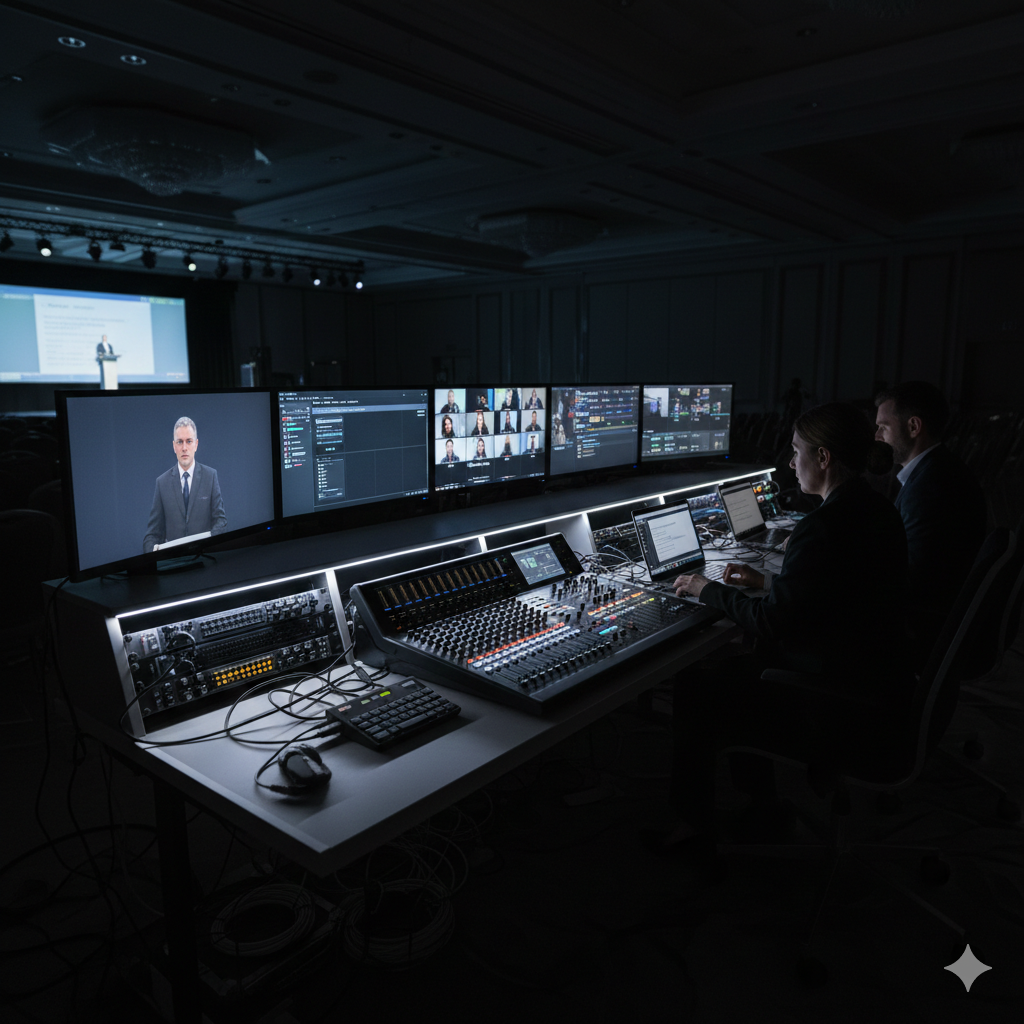
How to Plan Reliable AV for Hybrid Conferences Without Technical Risk
Hybrid conferences promise flexibility and reach, but they also introduce failure points that traditional events never faced. Audio delays, video sync issues, unstable streams, and confused presenters are common when hybrid AV planning is rushed or fragmented.
This guide outlines how to build hybrid conference AV systems that prioritize reliability first.
Why Hybrid Events Fail More Often Than In-Person Events
Hybrid events combine two production environments:
- Live audience AV
- Broadcast-quality streaming AV
Without unified planning, these systems conflict.
For teams sourcing conference AV infrastructure
Separate the Room Mix From the Stream Mix
Why One Audio Mix Is Not Enough
Room audio must feel natural. Stream audio must feel intimate. These are not the same.
Best practice:
- One audio mix for the room
- One dedicated mix for the stream
- Separate monitoring for each
Display Strategy for Hybrid Conferences
Room displays and stream graphics should serve different purposes.
Room displays:
- Agenda reinforcement
- Speaker support
- Visibility for in-person attendees
Stream graphics:
- Lower thirds
- Speaker identification
- Remote audience clarity
For event display and screen solutions
Redundancy Planning That Actually Matters
Redundancy should focus on:
- Playback devices
- Internet connections
- Signal paths
- Power
Avoid redundant hardware that doesn’t solve real risks.
Conversion CTA
If your next conference includes both live and remote audiences, start with professional hybrid event AV support
→ https://www.avrexpos.com/locations/