
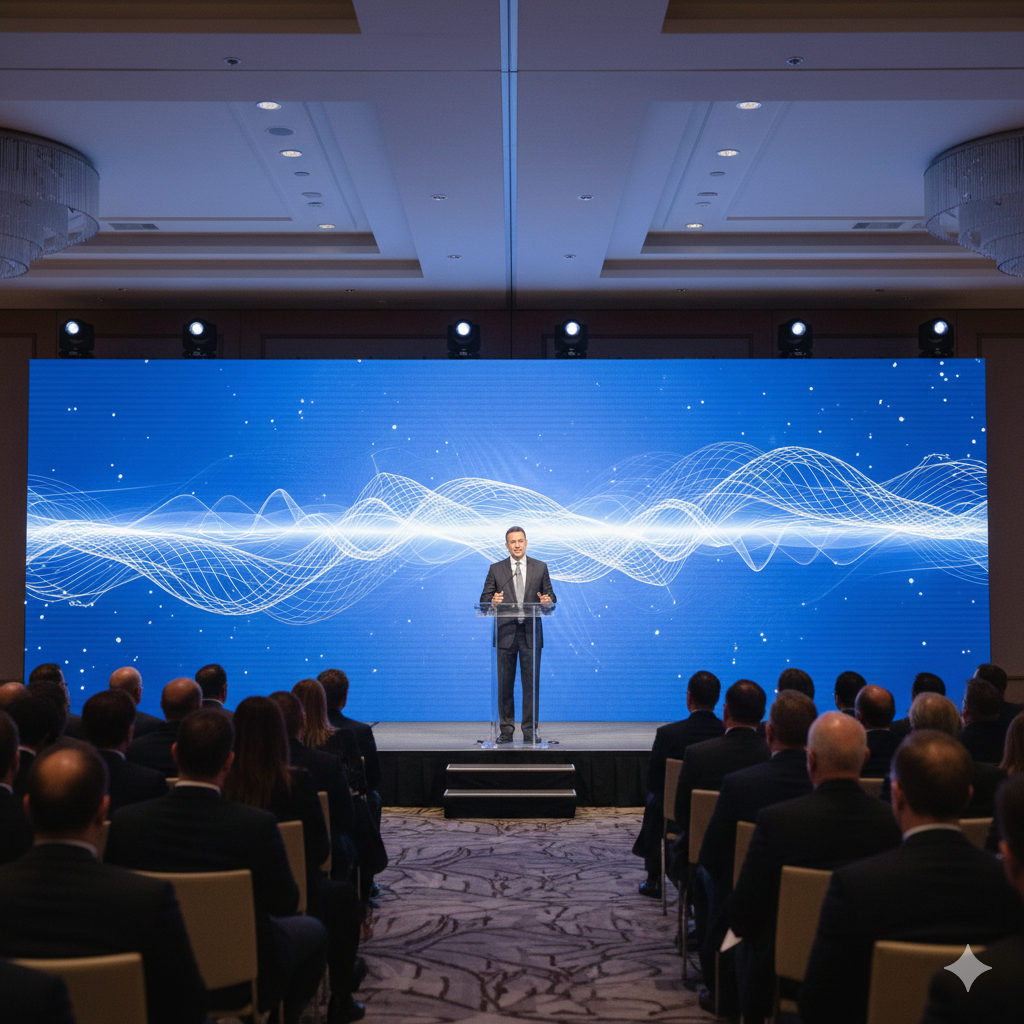
How to Design High-Impact LED Backgrounds for Corporate Keynotes
Corporate keynotes are no longer just about what the speaker says. The visual environment behind the speaker now plays a major role in how information is perceived, retained, and trusted. LED video walls are increasingly used as keynote backdrops, but when poorly designed, they can overpower the presenter or dilute the message.
This guide explains how to design LED backgrounds that support corporate keynote presentations instead of competing with them.
Why LED Backdrops Fail in Corporate Keynotes
Most failures come from treating the LED wall as advertising rather than architecture. Overly animated loops, high-contrast patterns, and busy visuals pull attention away from the speaker.
Common mistakes include:
- Excessive motion graphics
- Bright color cycling
- Small text behind presenters
- Content scaled incorrectly for camera framing
For teams planning professional AV setups for conferences
The Role of LED Walls in Speaker-Focused Events
LED as Environmental Support, Not the Star
In keynote settings, LED walls should create visual context and brand reinforcement while allowing the speaker to remain the focal point.
Best practices include:
- Static or slow-moving background loops
- Large-scale brand elements
- Subtle gradients or texture
- High contrast between presenter and background
Resolution, Pixel Pitch, and Viewing Distance
Corporate keynote audiences are typically seated closer than trade show aisles. This requires a finer pixel pitch and careful scaling.
Recommended guidelines:
- 9–2.6mm pitch for indoor keynotes
- Avoid scaling 1080p content to large LED canvases
- Match content resolution exactly to wall pixel dimensions
Learn more about LED video wall configurations for events
Camera Considerations for Hybrid and Recorded Keynotes
LED content must work both live and on camera. High-frequency patterns and sharp contrast can cause moiré or flicker on video.
Design content with:
- Reduced line detail
- Controlled brightness levels
- Camera-safe color palettes
Power, Rigging, and Redundancy
Keynote LED walls are often flown or ground-supported behind stages. Planning must include:
- Dedicated power circuits
- Backup signal paths
- Processor redundancy
- Cable concealment
If you’re planning a corporate keynote and want an LED backdrop that elevates your message without distraction, explore event AV support by location
Conclusion
A well-designed LED backdrop enhances a corporate keynote by supporting the speaker, strengthening brand identity, and creating a polished visual environment. The most effective LED backgrounds use subtle motion, appropriate brightness, high-resolution displays, and content optimized for both live audiences and cameras. Combined with proper rigging, power planning, and system redundancy, a professionally designed LED wall helps deliver a seamless presentation that keeps the focus where it belongs—on your message.
Frequently Asked Questions
1. Why are LED video walls popular for corporate keynotes?
LED video walls provide bright, high-resolution visuals that enhance stage design, reinforce branding, and improve content visibility for both live audiences and virtual viewers.
2. What makes an effective LED keynote backdrop?
An effective backdrop uses subtle animations, large brand elements, balanced colors, and simple designs that support the presenter rather than distract from the presentation.
3. How does pixel pitch affect keynote presentations?
Pixel pitch determines image clarity at different viewing distances. Smaller pixel pitches provide sharper visuals, making them ideal for indoor keynotes where attendees are seated close to the stage.
4. How should LED backgrounds be designed for hybrid events?
Content should be optimized for both in-person audiences and cameras by avoiding fine patterns, excessive brightness, and visuals that may cause flickering or moiré effects during live streaming or recording.
5. What technical considerations are important for LED stage backdrops?
Proper power distribution, secure rigging, processor redundancy, concealed cabling, and backup signal paths help ensure safe installation and reliable performance throughout the event.