
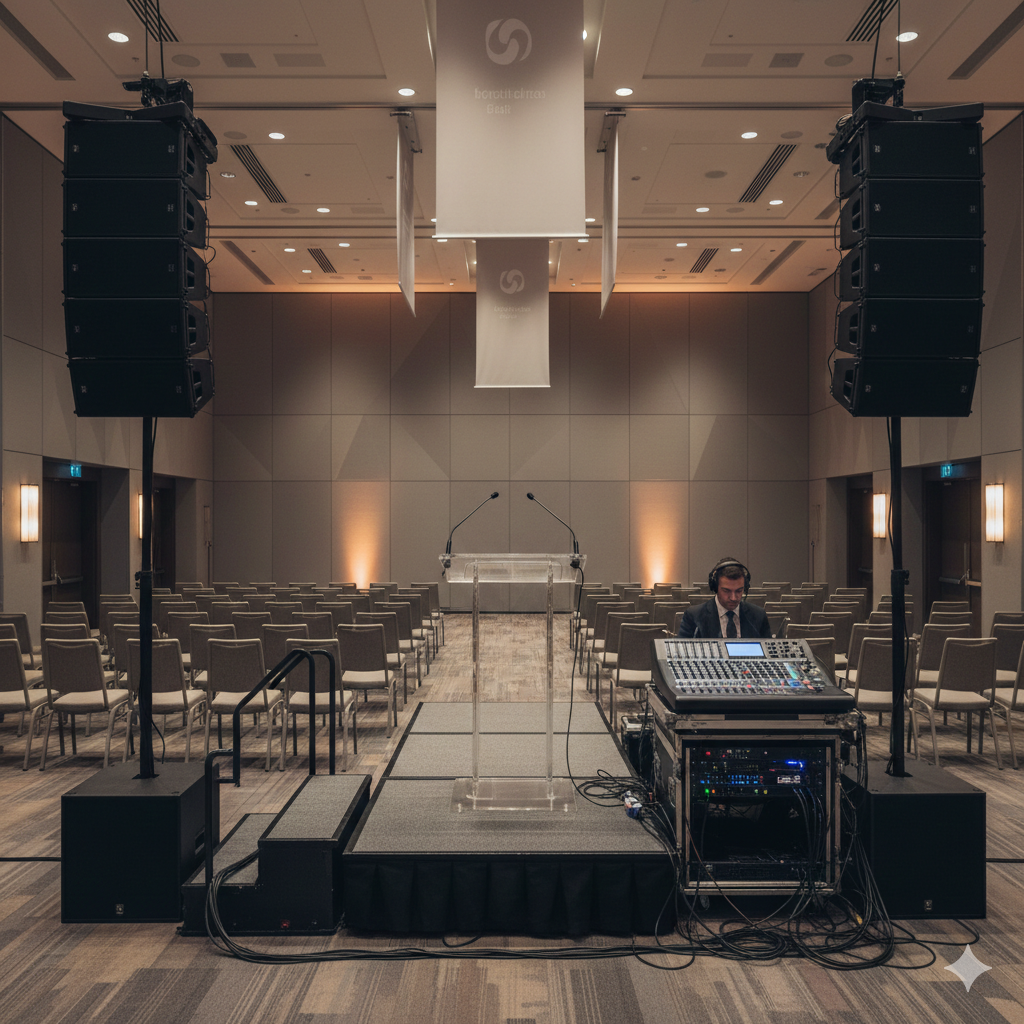
How Professional Audio Design Improves Attendee Retention at Conferences
Attendees will forgive mediocre visuals, but they won’t tolerate poor audio. Speech intelligibility, volume consistency, and tonal balance directly affect how long attendees stay engaged.
Why Audio Is the First Thing Attendees Notice
Poor audio causes:
- Listener fatigue
- Missed information
- Decreased session attendance
- Negative event perception
For Professional Event Audio Systems
Speaker Placement and Room Coverage
Why More Speakers Isn’t Better
Proper audio design focuses on:
- Coverage zones
- Directional placement
- Controlled volume
Microphone Selection and Gain Structure
Using the wrong microphone type creates feedback and inconsistency.
Best practices:
- Podium mics for lectures
- Wireless lavs for panels
- Handhelds for Q&A
Audio Design for Long-Form Events
Good audio reduces cognitive load, helping attendees stay focused longer.
If your event depends on clear communication, start with conference audio support by location
Conclusion
Professional audio design is one of the most important factors in delivering a successful conference. Clear, consistent sound helps attendees stay focused, understand presentations, and remain engaged throughout the event. From selecting the right microphones to optimizing speaker placement and balancing audio levels, every element contributes to a better audience experience. By investing in expertly designed audio systems, event planners can improve communication, increase attendee satisfaction, and ensure every presentation is heard exactly as intended.
Frequently Asked Questions
Why is audio quality more important than many event planners realize?
Attendees can overlook minor visual issues, but poor audio makes it difficult to understand speakers, leading to frustration, reduced engagement, and a less successful event.
How does professional audio design improve attendee engagement?
Clear, evenly distributed sound reduces listener fatigue, improves speech intelligibility, and helps attendees stay focused during presentations and discussions.
Why isn’t adding more speakers always the best solution?
More speakers can create echoes and uneven sound coverage if they are not properly designed and positioned. Effective audio systems prioritize balanced coverage rather than simply increasing volume.
Which microphones are best for conferences?
The ideal microphone depends on the presentation format. Podium microphones are well suited for keynote speeches, wireless lavalier microphones work well for presenters who move around the stage, and handheld microphones are ideal for audience Q&A sessions.
What causes audio feedback during conferences?
Audio feedback is typically caused by improper microphone placement, excessive gain, speaker positioning, or incorrect system configuration. Professional audio engineers help prevent these issues through careful setup and live monitoring.