
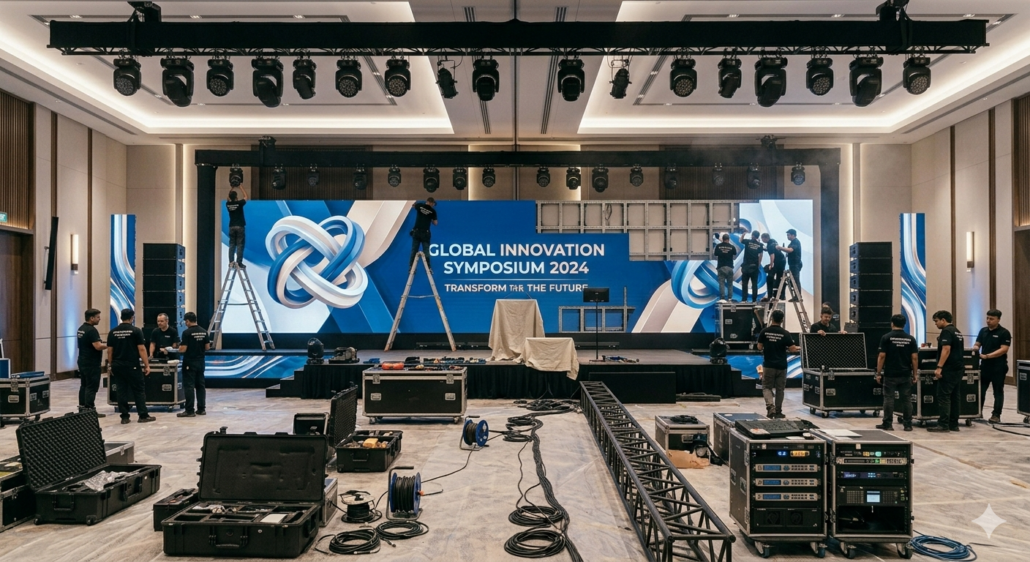
What Event Planners Need to Know About AV Setup Timelines
AV setup is one of the most underestimated parts of event planning. When timelines are compressed, everything suffers: testing, rehearsals, and overall execution.
Understanding realistic setup timelines is critical to delivering a smooth event.
What Determines Setup Time
Key factors include:
- Room size
- Equipment complexity
- Rigging requirements
- Power availability
Typical Setup Time Ranges
Small Meetings
2 to 4 hours
Mid-Size Events
4 to 8 hours
Large General Sessions
8 to 16+ hours
Why Early Access Is Critical
Limited access leads to rushed installs and increased risk.
Testing and Rehearsals
Every event should include time for:
- Audio tuning
- Video testing
- Presenter walkthroughs
Coordination Across Multiple Events
Organizations benefit from consistent workflows across locations.
Conclusion
A well-planned event AV setup timeline is essential for delivering a successful event. Allowing enough time for equipment installation, system testing, audio tuning, and presenter rehearsals reduces the risk of technical issues and last-minute delays. Every event has unique requirements, so setup schedules should be based on venue size, equipment complexity, and production needs rather than fixed estimates.
By coordinating AV logistics early and securing adequate venue access, event planners can create a smoother production process and ensure every presentation runs as expected. Working with an experienced AV provider like AVR Expos helps organizations build realistic timelines that support efficient setup, reliable performance, and a seamless event experience.
Frequently Asked Questions
What is an event AV setup timeline?
An event AV setup timeline is a schedule that outlines when audio-visual equipment should be delivered, installed, tested, and prepared before an event begins.
How much time is typically needed for AV setup?
Setup time depends on the event size and equipment requirements. Small meetings may take 2–4 hours, mid-size events often require 4–8 hours, while large conferences or general sessions can take 8–16 hours or more.
Why is early venue access important for AV setup?
Early access gives AV technicians enough time to install equipment, troubleshoot issues, perform system testing, and complete rehearsals without unnecessary pressure before attendees arrive.
What should be included in an AV setup schedule?
A complete AV setup schedule should include equipment delivery, installation, rigging, power checks, audio and video testing, presenter walkthroughs, rehearsals, and final system inspections before the event starts.
How can event planners avoid delays during AV setup?
Event planners can minimize delays by confirming venue access in advance, sharing event schedules early, coordinating with AV providers, and allowing sufficient time for testing and rehearsals before the event begins.