NYC Booth Displays: LED vs Projection in Tight Spaces
New York exhibit halls and hotels are space-constrained and fast-turn. If you are deciding between an LED wall and projection for a small booth, start with the room light and your content.
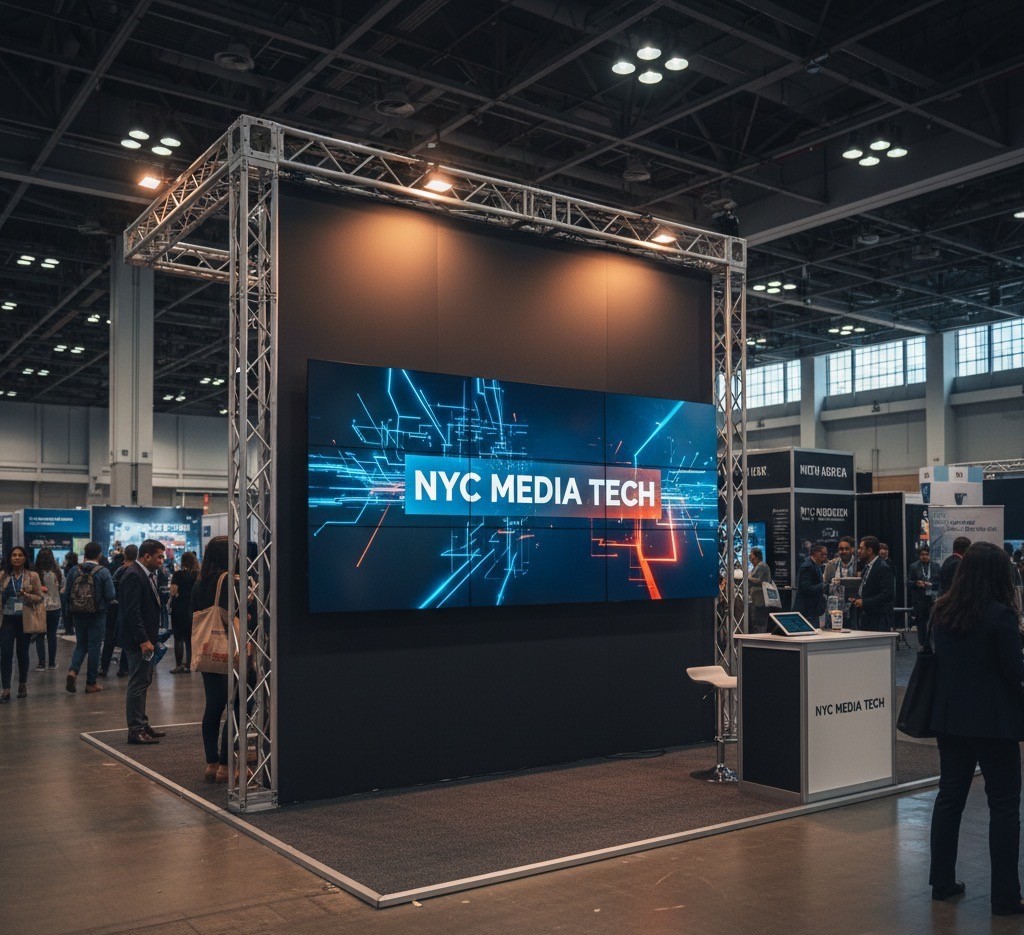
Space and power matter in NYC. A ground-supported LED wall requires base plates and a small footprint behind the wall; a flown wall can free floor space but needs rigging approvals.
Consider setup speed and risk. LED tiles are modular; a bad tile can be swapped, and calibration can be redone without losing the day. Projection may fit tighter budgets but requires more setup space.
Read our NYC case study comparing LED and projection.
Why Display Choice Matters in New York
Unlike many convention destinations, New York venues often feature:
- Smaller booth footprints
- Lower ceilings in hotel event spaces
- Limited storage and backstage areas
- Faster load-in and load-out schedules
- Bright exhibit hall lighting
These factors directly influence display performance, installation time, and overall event success.
When LED Walls Are the Better Choice
LED walls have become the preferred display solution for many exhibitors because they provide exceptional brightness and flexibility.
Superior Visibility
LED displays generate their own light, allowing content to remain vivid even under strong exhibition lighting.
Benefits include:
- Excellent brightness in open exhibit halls
- High contrast for presentations and videos
- Wide viewing angles
- Consistent image quality throughout the day
For booths competing for attention, visibility alone often justifies choosing LED.
Flexible Designs for Small Booths
Modern LED panels are modular, allowing displays to be built in a variety of configurations.
Popular layouts include:
- Full booth backwalls
- Vertical branding towers
- Corner installations
- Curved display walls
- Custom-sized video canvases
This flexibility allows exhibitors to maximize impact without wasting valuable booth space.
Faster Recovery if Problems Occur
Live events leave little room for technical delays.
If an individual LED tile develops an issue, technicians can replace that tile without dismantling the entire wall. Image calibration can also be completed quickly onsite, minimizing downtime.
This modular design reduces operational risk during busy exhibition schedules.
When Projection Is the Better Option
Projection remains an excellent choice in specific environments.
It performs best when:
- Lighting can be controlled
- Budgets are limited
- Booths require very large images
- Content is primarily presentations or static visuals
For enclosed meeting rooms or private demonstrations, projection can provide impressive image size at a lower equipment cost.
Space Requirements
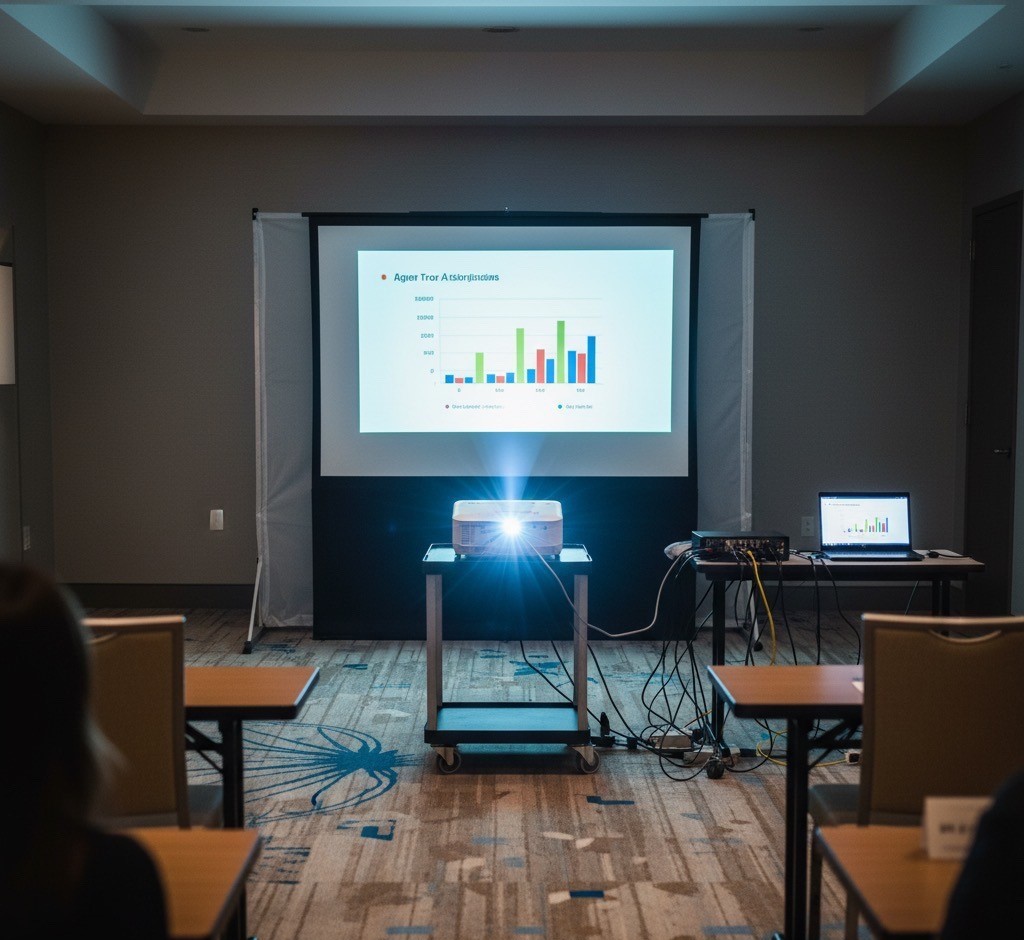
Although LED walls require very little depth behind the display, projection systems need adequate throw distance.
LED Wall Requirements
- Small footprint
- Ground-supported or rigged options
- Minimal rear clearance
- Easy cable management
Projection Requirements
- Space for projector placement
- Clear projection path
- Screen mounting location
- Careful alignment during installation
In many NYC venues where every foot counts, LED systems often simplify the overall booth layout.
Power and Installation Considerations
Every venue has different electrical requirements.
Before selecting a display solution, consider:
- Available power circuits
- Rigging restrictions
- Installation windows
- Floor loading requirements
- Venue regulations
Planning these details early helps avoid unexpected costs during setup.
Compare projection vs LED for small booths.
Conclusion
There is no universal answer when choosing between LED and projection. The right solution depends on your venue, lighting conditions, available space, and event objectives. While projection remains a practical option for many presentations, LED walls offer greater brightness, flexibility, and reliability for today’s trade shows and corporate exhibits. Working with an experienced AV provider ensures your display solution matches both your booth design and your event goals.
FAQs
Q: Which is better for small NYC booths, LED or projection?
A: LED for bright aisles and tall content. Projection for controlled rooms and single canvases on tighter budgets.
Q: What about power?
A: LED walls may need 208V three phase. Single projectors can run on a dedicated 20A circuit when brightness allows.
Q: Can I fly an LED wall in NYC hotels?
A: Often yes with approvals. Ground support is the simpler default when rigging is limited.