
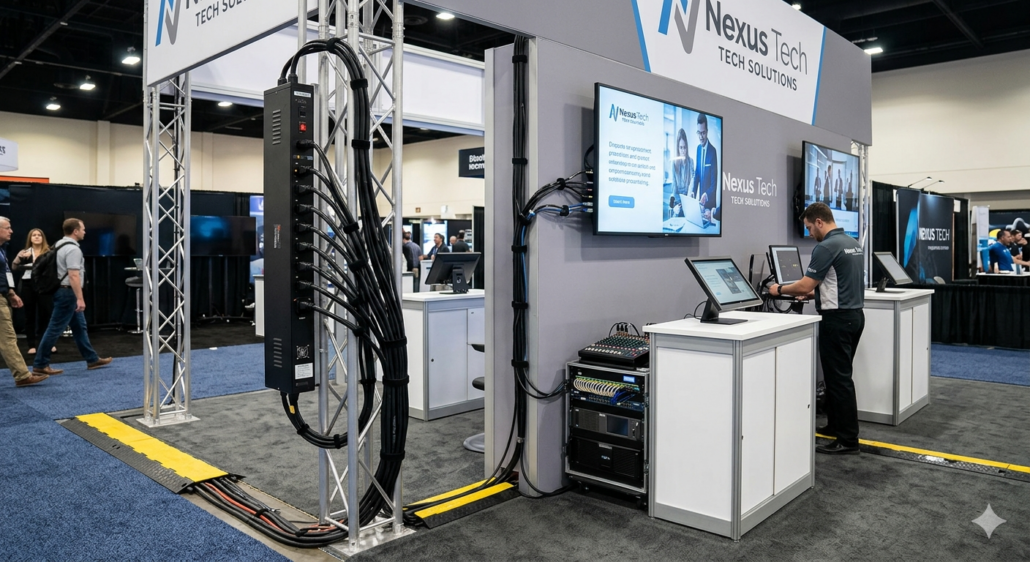
How to Plan Power Requirements for Trade Show Booths without Overpaying
Power is one of the most overlooked parts of trade show planning—and one of the most expensive mistakes when done wrong.
Most exhibitors either underestimate their power needs and risk equipment failure, or over-order and pay unnecessary venue costs
On a show floor, power is not just about plugging things in. It directly impacts:
- AV performance
- Booth layout
- Equipment reliability
- Overall execution
Understanding how to plan power correctly allows you to run your booth efficiently without wasting budget.
Why Power Planning Is Often Overlooked
Power is usually treated as a backend detail instead of a core part of booth strategy.
This leads to:
- Last-minute electrical orders
- Expensive on-site upgrades
- Equipment limitations
Planning early prevents these issues.
Understanding Your Equipment Load
Every piece of equipment draws power.
Typical contributors:
- LED displays
- Monitors
- Audio systems
- Lighting
- Charging stations
Knowing your load ensures accurate ordering.
Common Power Mistakes
Underestimating Usage
Leads to shutdowns and instability
Overestimating Needs
Results in unnecessary costs
Poor Distribution Planning
Creates cable issues and safety concerns
Planning Power Distribution
Power should be:
- Evenly distributed
- Hidden within the booth design
- Accessible for troubleshooting
How AV Impacts Power Requirements
LED walls and larger displays require careful planning.
Venue-Specific Considerations
Each venue has different electrical setups and costs.
Conclusion
Power planning is not just technical—it’s strategic. When done correctly, it prevents failures, reduces cost, and supports seamless execution.