
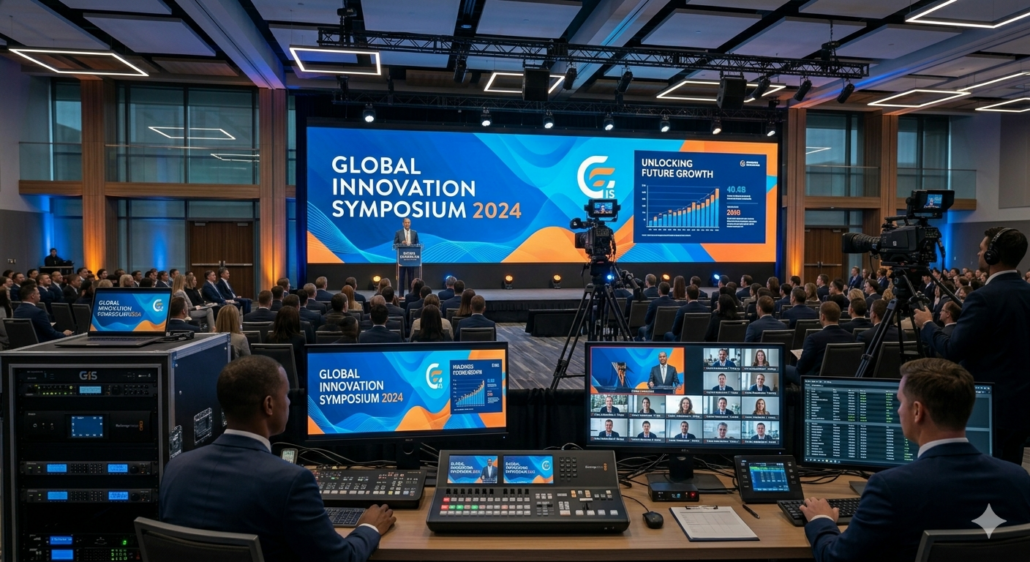
How Hybrid Events Are Changing AV Production Requirements
Hybrid events combine in-person audiences with virtual attendees. While this format expands reach, it also introduces new production requirements that traditional conferences never had to address.
Successful hybrid events require AV systems designed for both physical attendees and remote viewers.
The Dual Audience Challenge
Hybrid events must satisfy two different viewing environments:
- attendees sitting in the room
- viewers watching through livestream
Both audiences need clear audio, professional visuals, and seamless presentation transitions.
Additional Technology Required for Hybrid Events
Hybrid production typically includes:
- streaming encoders
- camera systems
- live switching equipment
- dedicated audio mixes for broadcast
For planners researching professional conference AV systems
Camera Placement Considerations
Camera angles must capture:
- presenters
- presentation screens • audience interaction
Poor camera placement can make even a well-produced event look unprofessional online.
Audio Considerations for Hybrid Events
Audio must be mixed differently for:
- in-room sound reinforcement
- livestream audio clarity
Dedicated broadcast audio mixes significantly improve remote viewer experience.
If your upcoming conference includes remote attendees, explore professional AV support available nationwide:
Conclusion
Hybrid events have transformed the way conferences are planned and produced. Delivering a seamless experience for both in-person and virtual audiences requires more than standard AV equipment—it demands professional camera systems, broadcast-quality audio, reliable streaming technology, and experienced production teams. With the right AV strategy, organizers can engage attendees regardless of location, extend their event’s reach, and deliver a polished experience that reflects their brand. Investing in professional hybrid event AV services ensures every participant enjoys clear communication, high-quality visuals, and a consistent event experience.
Frequently Asked Questions
What is a hybrid event?
A hybrid event combines an in-person audience with virtual attendees who participate through a live stream or online event platform.
Why do hybrid events require specialized AV production?
Hybrid events must deliver a high-quality experience for both audiences simultaneously, requiring additional equipment such as cameras, streaming systems, video switchers, and dedicated audio mixing.
What AV equipment is needed for a hybrid event?
Most hybrid events require professional cameras, video switchers, streaming encoders, microphones, audio mixers, presentation displays, and reliable internet connectivity to ensure smooth broadcasting.
Why is camera placement important during hybrid events?
Proper camera positioning captures presenters, audience engagement, and presentation content from the best angles, creating a more professional viewing experience for remote attendees.
Why are separate audio mixes used for hybrid events?
The audio needs of people in the venue differ from those watching online. A dedicated broadcast audio mix provides clearer, more balanced sound for virtual participants.
How can professional AV production improve a hybrid event?
Professional AV teams manage live streaming, camera operation, audio mixing, presentation transitions, and technical support to ensure both in-person and virtual audiences enjoy a seamless, engaging event.