
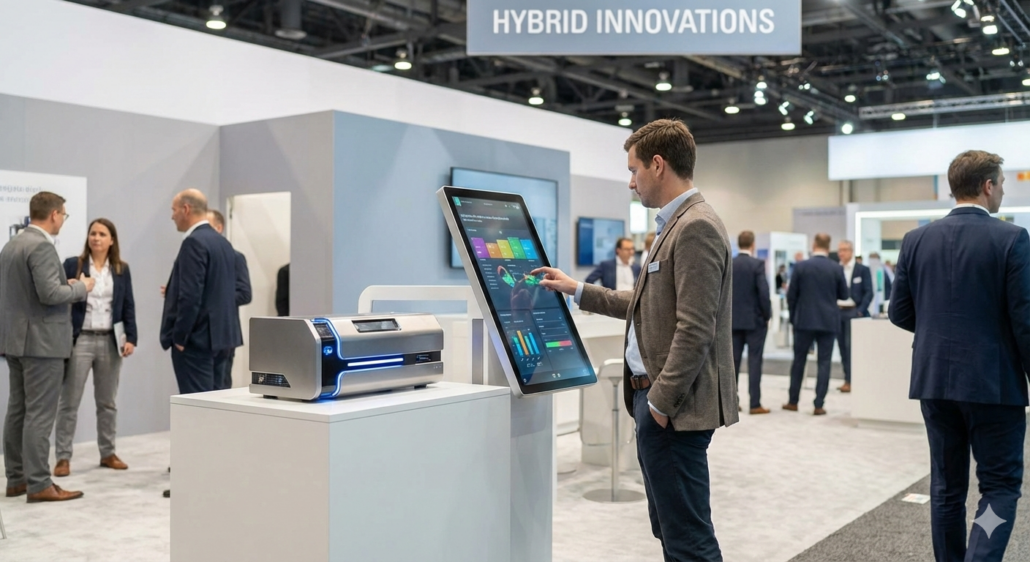
Digital vs. Physical Product Demos: Which Works Better at Trade Shows?
Product demos are the heartbeat of most trade show booths. They convince attendees, differentiate brands, and communicate value faster than anything else. But exhibitors today are split between two dominant demo strategies: digital and physical. Some rely heavily on technology-driven experiences, while others showcase real products on tables or stands. The truth is, neither approach is universally better — but each carries specific strengths, limitations, and ideal use cases.
This blog breaks down the differences between digital and physical demos, explains when each works best, and shows how exhibitors can combine both for maximum impact.
What Is a Physical Product Demo?
Physical demos showcase the real product.
Examples include:
- Machinery
- Medical devices
- Consumer electronics
- Tools or hardware
- Physical prototypes
Strengths:
- Tangible, hands-on experience
- Builds trust
- Demonstrates craftsmanship or engineering
Limitations:
- Heavy and expensive to ship
- Requires booth space
- Risk of damage
What Is a Digital Product Demo?
Digital demos rely on:
- Touchscreens
- LED walls
- Monitors
- 3D animations
- Software simulations
Strengths:
- Lightweight and easy to update
- Great for products that can’t be transported
- Highly scalable and visually striking
Limitations:
- Requires reliable power and equipment
- Needs well-designed content
- Can feel less “real” without physical context
When Physical Demos Work Better
Use physical demos when:
- The product is small and easy to ship
- Touch and feel influence buying decisions
- The product has mechanical movement worth showcasing
- You need to prove build quality
Industries where physical demos dominate:
- Manufacturing
- Tools and industrial equipment
- Medical devices
- Consumer goods
When Digital Demos Work Better
Digital demos excel when:
- Products are oversized (e.g., vehicles)
- Products are too complex to explain verbally
- You need dynamic storytelling
- You want to show features not visible on the physical item
Industries where digital demos shine:
- Software
- Cybersecurity
- Healthcare data platforms
- Robotics
- Real estate or architectural visualization
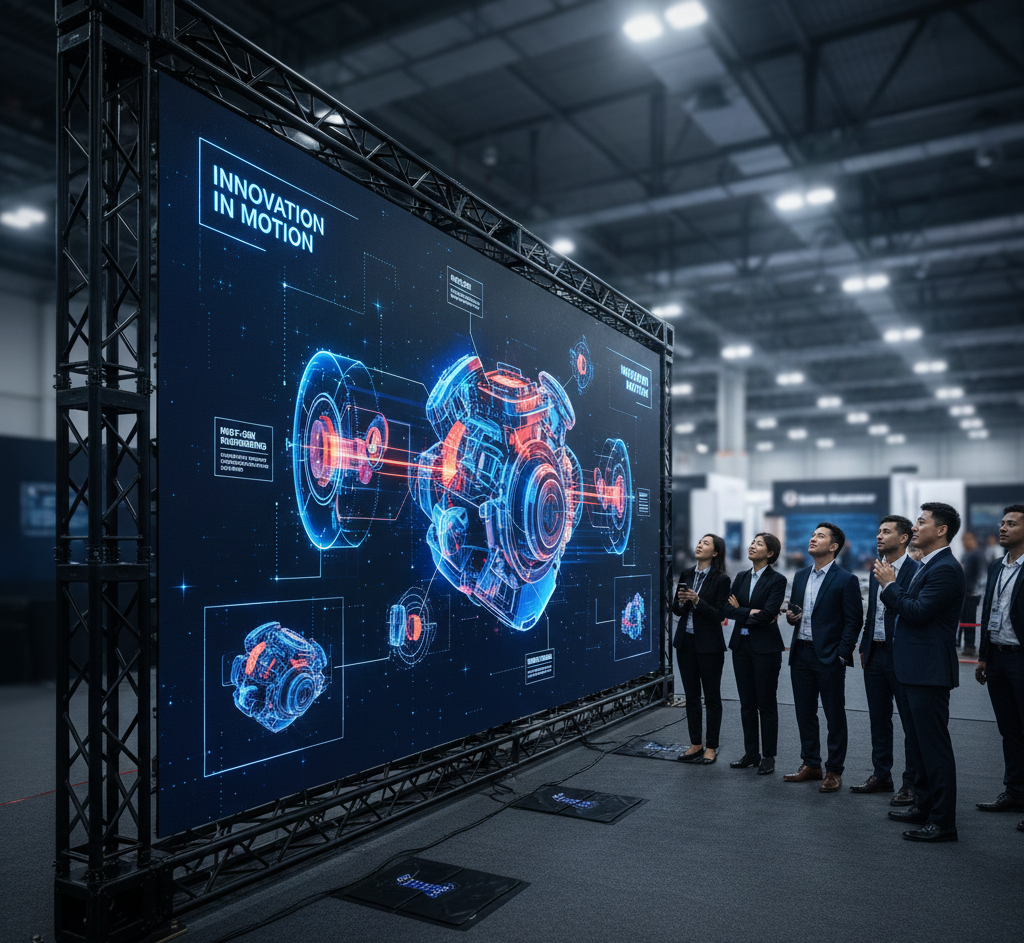
The Most Effective Approach: Hybrid Demos
The best-performing booths use both digital and physical components.
Examples:
- Physical product + touchscreen configurator
- Prototype product + LED wall animations explaining internals
- Live demo + promotional video loop
Hybrid demos create depth and flexibility.
How to Build a Digital Demo That Works
Successful digital demos require:
- Clear hierarchy of information
- High-contrast visuals
- 20–30 second animation loops
- Touchscreen interactivity
- Consistent branding
Best tools for digital demos:
- LED walls for storytelling
- Touchscreens for interaction
- Monitors for supplemental content
How to Build a Physical Demo That Works
Best practices:
- Use clean pedestals
- Add lighting to highlight the product
- Keep the product at waist or chest level
- Avoid clutter around the display
Pair with digital signage for context.
How to Decide Which Demo Type to Use
Ask:
- Is your product too large to ship? Go digital.
- Does physical interaction matter? Go physical.
- Is the product complex or multi-layered? Use both.
FAQs
Q1: Which type of demo attracts more people?
Digital demos attract from the aisle; physical demos convert interest into trust.
Q2: Are digital demos expensive to build?
Not with prebuilt templates and existing content assets.
Q3: Can AVR Expos support hybrid demo setups?
Yes — we provide touchscreens, LED walls, monitors, and full booth AV integration.