
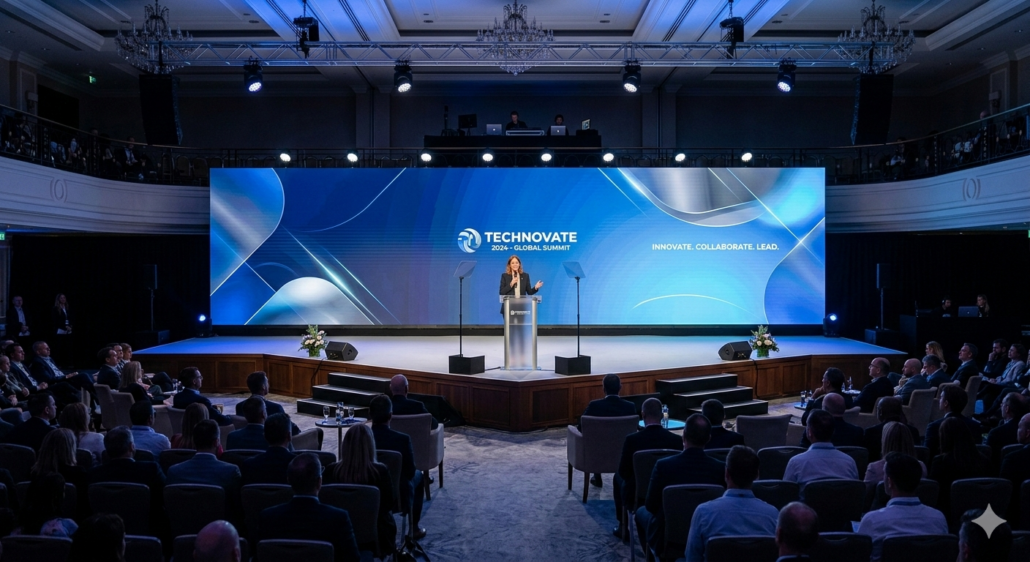
Conference Stage Design Trends That Increase Audience Engagement
Conference attendees expect more than a podium and projection screen. Stage design now plays a measurable role in engagement, perception, and content retention. Companies investing in thoughtful stage environments see stronger audience interaction and better brand recall.
This guide explores stage design strategies that elevate production without unnecessary cost escalation.
Why Stage Design Impacts Perception
Visual framing influences how authority and credibility are perceived. A well-designed stage:
• Directs attention naturally
- Reinforces brand tone
- Enhances camera framing
- Reduces visual clutter
For planners evaluating professional conference AV production support
LED Backdrops vs Layered Scenic Design
LED backdrops allow:
- Flexible branding
- Quick content transitions
- Camera-friendly visuals
Layered scenic elements provide:
- Depth
- Texture
- Controlled lighting interplay
Strategic combinations often produce the strongest result.
Learn more about scalable event display systems
Lighting as Architecture
Lighting defines dimension. Effective stage lighting:
- Separates speaker from background
- Prevents shadow distortion
- Maintains consistency across sessions
Designing for In-Person and Broadcast Simultaneously
Modern conferences often include streaming or recording. Stage design must:
- Avoid reflective surfaces
- Prevent moiré effects
- Support balanced exposure
If you’re planning a conference and want a stage design strategy that supports engagement and production clarity, explore event AV support by location
Conclusion
An effective conference stage is more than a presentation space—it is a key element of the attendee experience. By combining LED backdrops, layered scenic design, professional lighting, and broadcast-friendly layouts, event planners can create a stage that captures attention, strengthens brand messaging, and supports both in-person and virtual audiences. Thoughtful stage design enhances presentation quality, improves audience engagement, and helps ensure every session leaves a lasting impression.
Frequently Asked Questions
Why is stage design important for conferences?
Stage design influences how attendees perceive presenters and brands. A well-designed stage improves audience focus, enhances presentation quality, and creates a more professional event atmosphere.
Are LED backdrops better than traditional stage backdrops?
LED backdrops offer greater flexibility by displaying dynamic branding, videos, and presentation content. They also provide brighter visuals and quick content changes compared to static scenic elements.
How does lighting improve audience engagement?
Professional lighting keeps presenters clearly visible, creates depth on stage, reduces shadows, and helps direct the audience’s attention to key speakers and presentation content.
What should event planners consider for hybrid conferences?
Stage designs should be optimized for both live attendees and cameras by avoiding reflective materials, minimizing moiré patterns, ensuring balanced lighting, and creating visually appealing backgrounds for broadcasts.
Can stage design improve brand recognition?
Yes. Consistent branding through LED displays, scenic elements, lighting, and digital graphics reinforces your company’s identity and creates a more memorable experience for attendees.